
National Immunization Awareness Month Florida encourages families to prioritize their vaccinations.
During National Immunization Awareness Month Florida, families are reminded of the importance of ensuring their vaccinations are current.
National Sickle Cell Awareness Month: Understanding Sickle Cell Disease, Symptoms, Screening, and Care
Every September, National Sickle Cell Awareness Month provides an important opportunity to increase understanding of sickle cell disease, support individuals and families living with the condition, and encourage conversations about screening, treatment, preventive care, and ongoing research.
At Professional Health Care of Pinellas, we believe that education and regular medical care are important parts of helping patients manage chronic health conditions. Sickle cell disease is a lifelong inherited blood disorder that can affect many different parts of the body. While people living with sickle cell disease may require specialized care from a hematologist, regular primary care also plays an important role in preventive health, managing other medical conditions, monitoring overall wellness, and coordinating care.
During National Sickle Cell Awareness Month, we encourage patients and families throughout Pinellas County to learn more about sickle cell disease, understand the difference between sickle cell disease and sickle cell trait, and talk with their healthcare provider if they have questions about their health or family history.
What Is Sickle Cell Disease?
Sickle cell disease (SCD) is a group of inherited blood disorders that affect hemoglobin, the protein inside red blood cells that carries oxygen throughout the body.
Healthy red blood cells are normally round, flexible, and able to move easily through small blood vessels. In people with sickle cell disease, abnormal hemoglobin can cause some red blood cells to become hard, sticky, and shaped like a crescent or “sickle.”
These abnormal blood cells can have difficulty moving through smaller blood vessels. When blood flow becomes slowed or blocked, parts of the body may not receive enough oxygen. This can lead to pain and potentially serious complications.
Sickled red blood cells also break down more quickly than normal red blood cells. Because the body may not be able to replace them fast enough, people with sickle cell disease can develop anemia, which may contribute to fatigue, weakness, and other symptoms.
Sickle cell disease is present from birth because it is inherited through genes passed from parents to their children.
How Common Is Sickle Cell Disease?
Sickle cell disease affects people around the world and an estimated 100,000 people in the United States.
Although the condition is particularly common among people of African ancestry, sickle cell disease is not limited to one racial or ethnic group. It can also occur among people whose families come from areas including:
- Central and South America
- The Caribbean
- Mediterranean countries
- The Middle East
- India and other parts of South Asia
- Saudi Arabia
- Parts of Central America
Awareness is especially important because someone may carry the sickle cell gene without knowing it.
Understanding your personal and family medical history and discussing appropriate screening with a healthcare provider can help you make informed healthcare and family-planning decisions.
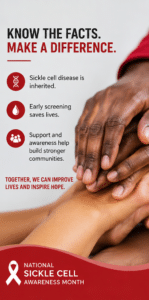
Sickle Cell Disease vs. Sickle Cell Trait
One of the most important messages during National Sickle Cell Awareness Month is that sickle cell disease and sickle cell trait are not the same thing.
Sickle Cell Disease
A person with sickle cell disease inherits abnormal hemoglobin genes from both parents. Depending on the genes inherited, there are several forms of sickle cell disease.
People with sickle cell disease can experience symptoms and complications that require lifelong medical monitoring and treatment.
Sickle Cell Trait
A person with sickle cell trait (SCT) usually inherits one sickle cell gene from one parent and a normal hemoglobin gene from the other parent.
Most people with sickle cell trait do not experience the symptoms associated with sickle cell disease and live normal, healthy lives.
However, a person with sickle cell trait can pass the sickle cell gene to their biological children.
Knowing whether you have sickle cell trait can therefore be particularly important when planning a family. If you are unsure of your status, talk with your healthcare provider about whether blood testing is appropriate.
How Is Sickle Cell Disease Inherited?
Sickle cell disease is genetic, meaning it is passed from parents to children through genes.
It is not contagious.
You cannot catch sickle cell disease through physical contact, coughing, sharing food, blood exposure in normal daily activities, or spending time with someone who has the condition.
When both parents have sickle cell trait, each pregnancy generally has:
- A 25% chance that the child will have sickle cell disease
- A 50% chance that the child will have sickle cell trait
- A 25% chance that the child will inherit neither sickle cell disease nor sickle cell trait
These probabilities begin again with each pregnancy.
Genetic counseling may help couples better understand their individual circumstances, testing options, and the likelihood of passing an abnormal hemoglobin gene to their children.
What Are the Symptoms of Sickle Cell Disease?
Symptoms of sickle cell disease vary significantly from one person to another. Some individuals experience frequent complications, while others experience them less often.
Potential signs and symptoms may include:
Episodes of Pain
One of the best-known complications of sickle cell disease is a pain crisis, also called a vaso-occlusive crisis.
Sickled cells can restrict or block blood flow through small blood vessels. This can cause sudden and sometimes severe pain.
Pain may occur in different areas of the body, including the:
- Chest
- Abdomen
- Back
- Arms
- Legs
- Joints
Pain episodes may last for several hours or several days and sometimes require emergency or hospital care.
Fatigue and Anemia
Because sickled red blood cells break down faster than normal blood cells, people with sickle cell disease may develop anemia.
Symptoms can include:
- Fatigue
- Weakness
- Low energy
- Shortness of breath
- Dizziness
Swelling of the Hands and Feet
Painful swelling of the hands and feet may occur, particularly in infants and young children with sickle cell disease.
Frequent or Serious Infections
Sickle cell disease may affect the body’s ability to fight certain infections. This is especially important in young children.
Preventive medical care and recommended vaccinations are therefore extremely important.
Other Possible Complications
Sickle cell disease can affect many organs and systems throughout the body. Complications may include:
- Acute chest syndrome
- Stroke
- Chronic pain
- Kidney problems
- Eye problems
- Lung complications
- Heart-related complications
- Bone or joint problems
- Gallstones
- Delayed growth in children
- Leg ulcers
Not everyone with sickle cell disease develops every complication. Regular medical care is important because some complications can develop before obvious symptoms appear.
When Is Sickle Cell Disease Diagnosed?
In the United States, newborns are routinely screened for sickle cell disease shortly after birth.
If an initial newborn screening suggests sickle cell disease or sickle cell trait, additional testing can be performed to confirm the result.
Adults who do not know whether they have sickle cell trait may also be tested.
A healthcare provider can order a blood test that looks for abnormal forms of hemoglobin.
Testing may be worth discussing if:
- Sickle cell disease or trait runs in your family
- Your partner has sickle cell trait or disease
- You are planning to have children
- You do not know whether you were previously tested
- Your healthcare provider recommends testing based on your medical or family history
How Is Sickle Cell Disease Treated?
Treatment is individualized according to the person’s age, type of sickle cell disease, symptoms, complications, and overall health.
A hematologist, a physician who specializes in blood disorders, commonly plays a central role in caring for patients with sickle cell disease.
Treatment may involve medications, preventive care, pain management, blood transfusions, and other therapies.
Hydroxyurea is one medication commonly used for sickle cell disease. For appropriate patients, it can help reduce sickling and decrease certain complications, including episodes of severe pain.
Blood transfusions may also be recommended in certain situations, including the prevention or treatment of specific complications.
For selected patients, blood and bone marrow transplantation or newer gene therapy treatments may also be considered. These advanced treatments are not appropriate for everyone and require careful evaluation by specialists experienced in treating sickle cell disease.
Sickle cell treatment has advanced significantly, and research continues to develop new approaches to managing the disease.
Patients should never start, stop, or change sickle cell medications without discussing the decision with their treating healthcare professional.
Why Regular Primary Care Matters
Specialized hematology care is extremely important for people with sickle cell disease, but managing overall health involves more than treating the blood disorder itself.
A primary care provider can help coordinate many aspects of a patient’s health.
Regular primary care visits may include:
- Blood pressure monitoring
- Diabetes screening
- Cholesterol screening
- Vaccination review
- Medication review
- Kidney health monitoring
- Nutrition counseling
- Mental health screening
- Preventive cancer screenings
- Management of other chronic medical conditions
- Coordination with hematology and other specialists
Because sickle cell disease can affect multiple organs, communication between the patient’s healthcare providers is particularly important.
At Professional Health Care of Pinellas, our goal is to support comprehensive primary care and help patients navigate their overall healthcare needs.
Healthy Habits for People Living With Sickle Cell Disease
Every patient’s medical needs are different, so personal recommendations should come from the healthcare professionals managing the condition. However, several everyday health habits can be important for people living with sickle cell disease.
Stay Hydrated
Dehydration may contribute to sickling and pain episodes in some patients.
Drinking adequate fluids is particularly important during hot Florida weather, physical activity, illness, or other situations that may increase fluid loss.
Patients who have heart, kidney, or other medical conditions that require fluid restrictions should follow their healthcare provider’s specific recommendations.
Avoid Extreme Temperatures
Exposure to very hot or very cold temperatures may trigger symptoms in some people.
Florida’s heat makes hydration, shade, appropriate clothing, and avoiding prolonged heat exposure especially important.
Keep Up With Vaccinations
Certain infections can be particularly dangerous for people with sickle cell disease.
Children and adults should discuss recommended vaccinations with their healthcare professionals and remain up to date with appropriate preventive care.
Attend Routine Medical Appointments
Don’t wait until symptoms become severe to see a healthcare provider.
Routine appointments allow healthcare teams to monitor changes, identify potential complications, review medications, and manage preventive healthcare.
Maintain Healthy Nutrition
A balanced diet supports overall health and can help with the management of other conditions such as hypertension, diabetes, high cholesterol, and obesity.
Discuss any supplements with your healthcare provider before taking them, particularly if you take prescription medication.
Exercise Safely
Physical activity can be beneficial for overall health, but people with sickle cell disease should avoid becoming excessively dehydrated or overexerted.
Your healthcare provider can help determine what type and intensity of exercise is appropriate for you.
Know When to Seek Immediate Medical Attention
Some complications of sickle cell disease can become medical emergencies.
Patients should follow the emergency plan provided by their sickle cell care team.
Seek prompt medical attention for symptoms such as:
- Fever
- Severe or unusual pain
- Difficulty breathing
- Chest pain
- Sudden weakness or numbness
- Difficulty speaking
- Sudden changes in vision
- Severe headache
- Loss of consciousness
- Severe abdominal swelling or pain
- Symptoms that are significantly different from a person’s normal sickle cell symptoms
If symptoms appear life-threatening, call 911 or seek emergency medical care immediately.
The Importance of Preventive Healthcare
Living with a chronic condition can sometimes cause routine preventive healthcare to receive less attention.
However, people living with sickle cell disease still need the same essential preventive services that other adults and children require.
Depending on age and individual risk factors, these may include:
- Annual physical examinations
- Blood pressure checks
- Cholesterol screening
- Diabetes screening
- Cancer screenings
- Immunizations
- Women’s health screenings
- Men’s health screenings
- Mental health evaluations
- Nutrition and weight management
- Smoking cessation support
Preventive care becomes even more important when someone is managing multiple medical conditions.
Supporting Someone With Sickle Cell Disease
National Sickle Cell Awareness Month is also an opportunity to recognize the daily challenges faced by individuals and families affected by sickle cell disease.
This September, during National Sickle Cell Awareness Month, we encourage everyone to participate in events that raise awareness about sickle cell disease.
A pain crisis is not simply an ordinary ache or discomfort. Sickle cell pain can be severe, unpredictable, and disabling.
Many organizations hold activities throughout National Sickle Cell Awareness Month to support those affected by this condition.
People living with sickle cell disease may have periods when they feel well and other periods when their symptoms interfere with work, school, family responsibilities, or normal activities.
Support groups often expand their outreach efforts during National Sickle Cell Awareness Month to help educate communities.
Friends, employers, teachers, coworkers, and family members can help by learning about the disease and responding with understanding.
Awareness campaigns during National Sickle Cell Awareness Month aim to dispel myths and provide accurate information about the disease.
Awareness helps reduce misconceptions and encourages patients to receive the care and support they need.
Individuals can take part in local events during National Sickle Cell Awareness Month to show their support.
Why National Sickle Cell Awareness Month Matters
Educators are encouraged to include discussions about sickle cell disease in their curriculum during National Sickle Cell Awareness Month.
September’s National Sickle Cell Awareness Month brings attention to a condition affecting approximately 100,000 Americans and millions of people worldwide.
Social media platforms often amplify messages related to National Sickle Cell Awareness Month for broader visibility.
Awareness can encourage:
Healthcare providers are reminded to emphasize screening during National Sickle Cell Awareness Month.
-
- Earlier testing
Donations are often solicited during National Sickle Cell Awareness Month to support research initiatives.
-
- Better understanding of sickle cell trait
Fundraising events take place throughout National Sickle Cell Awareness Month to support affected families.
-
- Improved access to appropriate medical care
Local businesses may sponsor events in honor of National Sickle Cell Awareness Month.
-
- Better coordination between primary care and specialists
Volunteering during National Sickle Cell Awareness Month can make a significant difference in raising awareness.
-
- Participation in research
For many, the events of National Sickle Cell Awareness Month are a source of hope and community support.
-
- Blood donation
Engagement in activities around National Sickle Cell Awareness Month fosters a sense of solidarity.
-
- Greater support for patients and caregivers
Advocacy efforts are crucial during National Sickle Cell Awareness Month to influence health policies.
-
- Reduced stigma surrounding chronic pain
Reading literature about sickle cell disease is encouraged during National Sickle Cell Awareness Month.
-
- Continued research into new treatments
Participating in workshops during National Sickle Cell Awareness Month can enhance knowledge about the disease.
Perhaps most importantly, awareness encourages people to have conversations about health.
Acknowledging National Sickle Cell Awareness Month can help reduce the stigma surrounding the disease.
If sickle cell disease or sickle cell trait is part of your family history, consider discussing it with your healthcare provider.
Community conversations initiated during National Sickle Cell Awareness Month can promote better understanding.
Primary Care in Pinellas County
Family discussions about sickle cell disease are encouraged throughout National Sickle Cell Awareness Month.
Managing your health is a long-term partnership.
Healthcare providers can highlight the importance of sickle cell testing during National Sickle Cell Awareness Month.
For individuals living with sickle cell disease, a coordinated healthcare team may include hematologists, primary care providers, pharmacists, ophthalmologists, kidney specialists, cardiologists, pain-management professionals, and other healthcare professionals depending on individual needs.
Individuals are encouraged to reflect on their health history during National Sickle Cell Awareness Month.
Professional Health Care of Pinellas is committed to helping patients throughout Pinellas County manage their overall health through comprehensive primary care, preventive services, chronic disease management, health screenings, and coordination of care.
National Sickle Cell Awareness Month reminds us of the importance of community support in healthcare.
If you have questions about your general health, preventive screenings, chronic medical conditions, or whether you should discuss sickle cell trait testing with your healthcare provider, schedule an appointment with Professional Health Care of Pinellas.
Engaging with local organizations during National Sickle Cell Awareness Month can foster a sense of community.
This September, during National Sickle Cell Awareness Month, take time to learn about sickle cell disease, share reliable health information with your family, and make preventive healthcare a priority.
Every event during National Sickle Cell Awareness Month creates a ripple effect of awareness.
Your health matters every month of the year.
This National Sickle Cell Awareness Month, make it a point to educate those around you.
Medical Disclaimer
This article is provided for general educational purposes and should not be considered a substitute for personalized medical advice, diagnosis, or treatment. Individuals with sickle cell disease should work closely with a qualified healthcare professional and hematology specialist regarding their treatment plan. If you believe you are experiencing a medical emergency, call 911 or seek emergency medical care.
Suggested SEO Information
SEO Title:
National Sickle Cell Awareness Month | PHC Pinellas
Meta Description:
Learn about sickle cell disease, symptoms, sickle cell trait, screening, treatment, preventive care, and healthy living during National Sickle Cell Awareness Month.
About the Author: Emile Mrad

